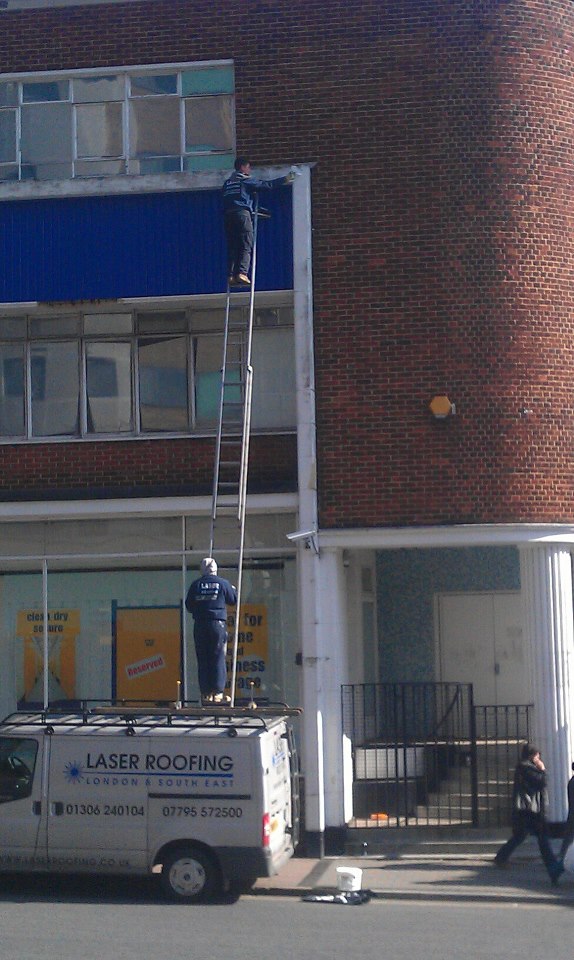
Firm turned blind eye to roof dangers
A former Mansfield firm has been prosecuted after an employee fell more than four metres through a fragile rooflight while installing solar panels on a barn in Barnsley.
Magistrates in Barnsley heard the 25-year-old worker, from Mansfield, could have been killed, but had escaped with serious injuries to his wrist, which needed pinning to repair the fractured bones.
The incident, on 19 June 2013 at a farm in the town, was investigated by the Health and Safety Executive (HSE), which prosecuted DAS Technology Ltd, then based in Mansfield, Nottingham, but which has since gone into liquidation.
HSE found company had failed to provide any safeguards to protect workers from falls or to mitigate the dangers from working on fragile surfaces. It had also continued to operate in the same way for two days after the fall until the job was finished, with no-one from the company visiting to investigate or install better safety measures.
The court was told DAS Technology Ltd had also been warned by employees within the company that its system of work was unsafe following a similar incident on a roof eight months earlier.
HSE identified that the work on the roof had been badly planned and employees had not been provided with the right equipment. They were either walking on the roof or from ladders spanning it. There were no arrest nets on the underneath, or lightweight staging on the roof to support the workers safely.
DAS Technology Ltd., c/o the Administrators of Regents Park Road, London, was fined a total of £25,000 and ordered to pay £541 in costs after guilty pleas were entered to two breaches of the Work at Height Regulations.
After the hearing, HSE Inspector Dave Bradley said:
“This was a serious incident in which a young man suffered painful injuries, but it could very easily have been a fatality.
“It could have been avoided if DAS Technology had employed controls that are routinely used for work of this nature on fragile roofs. The firm had been warned by its own employees of the dangers but turned a blind eye to ignore those concerns and continued with an unsafe method of work regardless.
“It was also astonishing to find that even after this young man’s fall, they didn’t turn up on site to see what could be done to improve the workers’ protection and again carried on regardless.
“Falls from height can and do kill as well as seriously injured many hundreds of workers each year. The controls needed are well-known in the industry and where contractors are found to be flouting these requirements, they should expect strong enforcement from HSE.”
York father’s near-death fall lands firm in court
A young father of two suffered life-changing injuries after he plunged seven metres through an unsafe fragile roof at a farm in Harrogate, magistrates have been told.
His employer, a Tockwith-based agricultural engineering company hired to work on the building, had failed to provide any precautions to protect workers from falls.
The incident, on 4 June 2013, left 22-year-old Daniel Telford with multiple injuries. He broke his neck and suffered shattered vertebrae, broken shoulder blades, several cracked ribs, a collapsed lung, broken arm, fractured pelvis, broken right hip, tendon damage to a foot and both hands, and serious nerve damage.
Mr Telford, of Long Marston, York, whose wife was then pregnant, was in hospital for four weeks and had to use a wheelchair for some three months after being discharged. He is still unable to return to work.
The Health and Safety Executive (HSE) investigated and prosecuted Mr Telford’s employer, Spruce and Hawe Ltd., and its director Michael Spruce, from Wetherby, for serious safety failings.
Harrogate Magistrates were told the firm had been contracted by the farm’s owner to extend one of the buildings, as it had built the original building several years earlier.
Mr Telford was working with Mr Spruce on the roof of the property replacing rooflights when the fragile roof-sheet he was standing on gave way. He fell through and crashed down on the concrete floor below.
HSE found the company, and Mr Spruce as director, had failed to take any steps to prevent falls through the roof. Measures could have included netting underneath, safe working platforms, or newer ways of working such as from a platform underneath.
HSE served an immediate prohibition notice on the company stopping any further work at height until precautions were taken to protect from falls or to mitigate the dangers.
Spruce and Hawe Ltd, of Blind Lane, Tockwith, York, was fined £12,000 after admitting breaching the Health and Safety at Work etc Act 1974. Michael Spruce, of Second Avenue, Wetherby, Leeds, was fined £3,000 after pleading guilty to breaching Section 37 of the same Act in his capacity as a director. Costs of £513 were also imposed.
After the hearing, HSE Inspector Julian Franklin said:
“This young man could have been killed by a simple failure to follow well-known systems of work when on a fragile roof. As it is, he sustained severe and multiple injuries that have changed his life.
“A year on, he is struggling to come to terms with the physical and psychological after-effects of this horrendous accident.”
Daniel, now 23, described how the fall had changed his life for ever:
“After I fell, I was lying on the floor in horrendous pain, but because of fluid building up in my throat, I was shouting for someone to put me in the recovery position. If they hadn’t, I know I could have choked to death.
“Later in hospital, I remember my family coming to see me when I was in resuscitation and can still remember how devastated they all were. “I had a number of operations and lots of different surgery. I’d broken my neck, both shoulder blades, several ribs and had a collapsed lung. When I could get off my back in the hospital bed, it was absolutely agonising.
“I also developed hyposensitive skin from the broken neck which meant that the slightest touch, even water or wind on my skin, was painful. It still is, a year later.
“When I came home in a wheelchair, my self-esteem was totally gone as I couldn’t do anything for myself. I felt like a complete wreck. People had to feed me, give me a drink, pass me something to look at as I just couldn’t move my arms or legs.
“Twelve months later, I am slowly getting better and hope to be able to return to work eventually. I am walking again, although my hip often gives way. I feel it has been a constant battle – so many routine and normal day to day tasks are still a challenge.” Mr Franklin, who carried out the HSE investigation, added:
“It is vital for those people controlling work activities to ensure they follow the correct precautions when anyone is working at height. Relying on standing on the bolts on a fragile roof is criminal, and where we find that sort of behaviour, we will take whatever enforcement or prosecution action we can.
“Workers have the right to return from a day’s work safely and without harm. Employers have a duty of care they must not shirk, or we will take action against them. Where breaches occur and can be attributed to an individual in charge of an operation, we will take action against that individual as well as the company if the breaches so deserve.”
Firm sentenced after worker’s roof fall
A Glasgow company has been fined for safety failings after a worker narrowly escaped major injury after falling five metres through a fragile roof light.
David Jack, then aged 53, was working on a roof at John Watson and Co Ltd’s premises with a colleague when the incident happened on 8 November 2011.
Glasgow Sheriff Court heard that Mr Jack was sub-contracted by a regular contractor for the company and had been painting the roof when he fell through a fragile fibreglass roof light into factory premises below, a printing machine breaking his fall before he hit the ground. He sustained a cut leg needing stitches, blunt force abdominal injury and a sprained wrist resulting in an overnight stay in hospital. He returned to work two weeks later.
An investigation by the Health and Safety Executive (HSE) revealed a number of failures in the company’s management of health and safety.
The court heard that Mr Jack, a painter and decorator, had been sub-contracted by a regular contractor of John Watson and Co to carry out the work on the roof.
On the day of the incident, Mr Jack and an apprentice employed by John Watson & Co accessed the five-metre-high roof via a ladder, carrying the forty 20kg tins of paint needed to complete the job. The workers had been told about the presence of fragile roof lights but there were no measures in place to prevent them falling from the roof edge or falling through the roof lights.
HSE Inspectors found that the company’s health and safety consultants had not been asked for advice on safe working at height. In addition, John Watson & Co failed to ensure their contractor carried out a suitable risk assessment to identify the safety measures required to control the risk of falls.
After the incident, HSE issued a Notice prohibiting work on the roof with immediate effect. The company complied with this and later employed a roofing contractor to carry out the necessary repairs.
John Watson & Co Ltd, of Kyle Street, Glasgow, was fined £20,000 after pleading guilty to breaching Sections 2(1) and 3(1) of the Health and Safety at Work etc Act 1974.
Following the case, HSE Principal Inspector Graeme McMinn, said:
“John Watson & Co Ltd made no efforts to ensure that their contractor took the necessary safety precautions to prevent falls through fragile roof lights or from exposed open edges on the roof.
“Simple measures such as using barriers to prevent access to fragile areas or installing coverings over the roof lights could easily have prevented this worker getting injured.
“The workers were exposed to unacceptable risks of falling from the roof or through the roof lights for several days. This incident could very easily have had much more severe consequences.”
On average seven people are killed each year after falling through a fragile roof or fragile roof light – accounting for almost a fifth of all the fatalities caused by a fall from height in the construction industry. Many others suffer permanent disabling injury.
Roof fall changes worker’s life in seconds
A 54-year-old Leeds worker suffered life-changing injuries when he plunged nearly seven metres through an unsafe rooflight while installing solar power racking, a court in Bradford heard.
Peter Bettison, from Crossgates, sustained multiple injuries and needed to be under sedation for most of the 22 days he had to spend in hospital.
As well as a punctured lung and fractured skull, he suffered a head wound needing 13 staples, a broken collar bone, broken ribs along his left side, a fracture to his left hand, a broken left pelvis and chipped bones in his spine and hip. Mr Bettison returned to work eight months later but in a different role.
The fall through the rooflight, which lacked any protection, led to Mr Bettison’s employer, Duncan Plumbing, Heating and Electrics Ltd, being prosecuted by the Health and Safety Executive (HSE) for serious safety failings.
Bradford Magistrates heard that Mr Bettison and another employee were installing the solar panel racks on a farm building roof in Ilkley on the 28 November 2011.
Several had been successfully put in place, but after securing one further rack Mr Bettison stood up and unwittingly stepped on one of the rooflights. It instantly gave way, sending him crashing nearly seven metres to the concrete floor below.
The HSE investigation found that Duncan Plumbing, Heating and Electrics Ltd had carried out two site surveys in advance of the work, identified the presence of rooflights, and had loaded the information in their computer system for the design team. However, the firm then failed to take any action to protect either the workers from falls or the rooflights themselves.
HSE said a sign on the side of the barn warning of a fragile roof was also apparently disregarded.
Duncan Plumbing, Heating and Electrics Ltd., of Rudgate Business Park, Tockwith, York, was fined the maximum magistrates were able to impose – £20,000 – and ordered to pay £3,408 after pleading guilty to a breach of the Health and Safety at Work etc Act 1974.
After the case, HSE Inspector Sarah Lee said:
“Mr Bettison suffered devastating injuries in this fall and could so easily have been killed. His fall may have been broken by hitting the hay bales and, if so they probably saved his life.
“The overall system of work employed by Duncan Heating, Plumbing and Electrics Ltd was inherently unsafe. They did not recognise or properly identify the dangers faced by their employees so safety measures were totally neglected.
““It is astonishing that the company, having got the information about rooflights at their fingertips, subsequently failed to do anything about it. Had they been protected from above or netted from below, this incident could have been avoided.
“Falling from height is still the biggest killer in the construction industry and also leads to many injuries. The risks are also well-known in the trade so there is no excuse for putting workers at unnecessary risk.”
Mr Bettison, a father of two and a grandfather to five, said:
“I can no longer drive long distances. I can manage about an hour before I start to ache in my left shoulder and pelvis. I still get dizzy sometimes when I lie down which is a result of the accident.
“I just don’t have the strength that I used to have and this has stopped me doing a lot of things such as DIY. As a family, we don’t go for walks as much as we used to as I just get tired too quickly. The impact of the fall has been felt not just by me, but by all my family.”
Fines imposed for dangerous scaffolding work
Carefree scaffolders put themselves and passers-by in danger as they worked unsafely at height above a busy Covent Garden street, a court has heard.
A nearby member of the public was so concerned about an imminent fall in Tavistock Street on 20 June 2013 they captured the work on camera and sent the images to the Health and Safety Executive (HSE).
Clerkenwell-based JOS Scaffolding Limited was prosecuted on the strength of the photographic evidence and a subsequent HSE investigation into safety failings.
Westminster Magistrates Court heard the firm was responsible for erecting a five-storey scaffold that was some ten metres above street level once complete.
The unsafe work was during the initial construction phase as the structure took shape. Pictures showed workers using unsecure and precariously balanced boards to access and pass materials to higher levels. They also showed a worker sitting near the top of the structure casually dangling his legs over the side.
Magistrates were told there was nothing in place at this point of the work to prevent or mitigate a fall of persons or equipment or materials. This in turn put anyone walking underneath or alongside the scaffold at risk.
HSE established the work was poorly planned and managed, and that two of the three-man team erecting the scaffold were lacking training and accreditation to prove their competence.
In short, the work fell well below the legally required standard – although both HSE and the court acknowledged that efforts had been made to improve standards once the failings were brought to the company’s attention.
JOS Scaffolding Limited, of Gray’s Inn Road, London, WC1, was fined a total of £5,000 and ordered to pay £734 in costs after pleading guilty to two breaches of the Work at Height Regulations 2005.
After the hearing, HSE Inspector Andrew Verrall-Withers commented:
“Scaffolding work is fraught with risk and can be extremely dangerous if it isn’t carried out properly. The standards here were sorely lacking and the photographic evidence speaks for itself in terms of the risks taken.
“None of the missing measures, such as guard rails and secured boards and ladders, were difficult to provide, and there was no excuse. “It isn’t just the workers themselves who could end up getting seriously hurt or killed. People should be able to walk along a pavement without having to worry about a piece of scaffold slipping from the hands of an overhead worker.
“Thankfully nobody was injured, but that doesn’t detract from JOS Scaffolding failing to ensure the work at height was properly planned, managed and executed in a safe manner. I would like to thank the concerned member of the public who brought the matter to our attention and who provided such clear visual evidence.”
Firm in court over worker’s life-changing injuries
A recycling company has been fined for serious safety failings after a worker was stuck by a reversing forklift truck at its Hemswell site.
Robin Eddom, a 63-year-old engineer from Scunthorpe, suffered severe back and tissue injuries in the incident at ECO Plastics Ltd’s processing plant on 10 March 2012.
Mr Eddom was walking through the ‘Goods Out’ warehouse when he was hit by the reversing vehicle. He was taken to hospital by air ambulance with internal bleeding, two damaged vertebrae in his lower spine and extensive tissue damage to his back, shoulders, neck, thighs and knees.
The incident was investigated by the Health and Safety Executive (HSE), which prosecuted ECO Plastics Ltd at Lincoln Magistrates’ Court.
The court heard that ECO Plastics had designated a separate walkway for pedestrians to use within the waste processing building. However, HSE found the company had allowed the walkway in the ‘Goods Out’ warehouse to be taped off and blocked with building materials and equipment whilst construction work was being carried out.
As a result, Mr Eddom and other employees had to share a route used by loaded forklift vehicles which were regularly manoeuvring and reversing.
ECO Plastics took no steps to provide or redirect their employees to an alternative, safe pedestrian route, inside or outside the warehouse.
ECO Plastics Ltd of Hemswell Business Park, Hemswell, Lincolnshire, pleaded guilty to breaching Section 2(1) of the Health and Safety at Work etc. Act 1974 and was fined £12,500 and ordered to pay costs of £5,261.
Speaking after the hearing, HSE inspector Karin Abbott said:
“This could so easily have been a fatal incident. Mr Eddom has been left with devastating physical and psychological injuries, which have forced an earlier retirement from work and will leave him in discomfort for the rest of his life.
“The incident was entirely preventable. Mr Eddom should have been able to use the designated walkway provided within the building, but this was not possible as this walkway was completely blocked by stored building materials and equipment.
“The dangers associated with vehicle movements around pedestrians are well-known in the industry. However, ECO Plastics failed to recognise the dangers the blocked walkway had created or provide adequate control measures to ensure the warehouse could be safely accessed by pedestrians while construction work was underway.”
Director jailed for illegal supply of asbestos sheeting after worker fell to his death
A 64-year-old Shropshire man has been sentenced to 12 months in prison after his company illegally supplied roofing panels containing asbestos.
Company director Robert Marsh’s offences came to light after a 56-year-old construction worker, who was roofing a barn using the panels, fell through the fragile material and later died.
An investigation by the Health and Safety Executive (HSE) found that Mr Marsh, sole Director of RM Developments (2005) Ltd of Newport, Shropshire, had supplied pre-used roofing sheets containing white asbestos to a farming partnership building a barn in Frankley, Worcestershire.
During a three-day hearing, Worcester Crown Court heard that after Mr Marsh supplied the roofing sheets, the partnership hired steel erector Tony Podmore to use the materials to build the barn.
But during the final phase of its construction on 8 June 2011, Mr Podmore, of Calf Heath, near Wolverhampton, fell through the fragile asbestos cement roof sheets, landing on the concrete floor more than six metres below. He later died of his injuries in hospital.
The farm partnership had agreed to pay £4,000 for what they thought would be substantial roofing material. However Mr Marsh supplied poor-quality, second-hand roof panels that had cost him nothing. As he had paid just £250 for transport, he stood to make a profit of £3,750 on the roof alone.
The court was told that after the fall, Mr Marsh tried to persuade witnesses to hide the sheets that he had supplied telling one, ‘We’ll all take the fall for this’. He also told Mr Podmore’s daughter that her father had fallen from the roof edge rather than through the fragile roof sheets and later tried to persuade Mr Podmore’s relatives not to report the incident to the HSE.
Robert Marsh of RM Developments (2005) Ltd, of Station Road, Hodnet, Market Drayton, Shropshire, changed his plea to guilty on the first day day of his trial to one breach of the Health and Safety at Work etc Act 1974, and also to a contravention of The Registration, Evaluation and Authorisation of Chemicals (REACH) Regulations 2008. As well as the 12 month prison sentence he was disqualified from being a director for six years and ordered to pay £10,000 costs.
Passing sentence, His Honour Judge Michael Cullum said Mr Marsh’s actions were “wholly reprehensible” adding that he acted out of “selfish self-interest” to maximise profit at the expense of health and safety.
Speaking after the prosecution, HSE Inspector Luke Messenger said:
“Asbestos fibres are a well-known and widely-publicised health risk and can lead to fatal illnesses. The supply of materials containing asbestos has been illegal for many years. Mr Marsh demonstrated a complete disregard for the law for his financial gain. In this case, the weak second-hand panels he supplied were a significant contributing factor to the death of Mr Podmore.
“This tragic incident also demonstrates the dangers of working on fragile roofs. Falls from height are the major cause of workplace fatalities and measures should always be taken to protect workers when they are working from height.
“This result today is a reflection of the seriousness of the offence and could only have been achieved with the hard work of the investigating inspector, the late Mr Paul Humphries”.
Mr Podmore’s widow, Gail, said:
“We have lost a fantastic, hard-working family man. The gap in our hearts can never be filled. Anthony can never be replaced, nor would we want him to be.
“We are extremely grateful to HSE, especially Paul Humphries, for their hard work. It has been a long three years but we finally have some closure and we are very pleased to see justice has been served.”
Unregistered fitter fined for faulty flue
An unregistered gas fitter has been given a suspended prison sentence and ordered to do 180 hours of community work after carrying out illegal and dangerous work at two homes in Essex.
Anthony Hoskins, 49, from Kelvedon Hatch, Essex, fitted gas boilers at homes in Brentwood and Ingatestone in 2012 and 2013 despite not being a member of the Gas Safe Register, as UK law requires.
His failings came to light after the Ingatestone householder complained to Gas Safe Register because Mr Hoskins had left the job unfished. When Gas Safe Register investigated, they met the Brentwood householder who had also hired Mr Hoskins to install his boiler.
Colchester Magistrates’ Court heard that one of the two boilers Mr Hoskins had installed was deemed to be “At Risk” because the flue had not been correctly sealed.
An investigation by the Health and Safety Executive (HSE) revealed that even a small movement of the flue could have resulted in combustion products leaking from the boiler flue, potentially exposing occupants of the home to carbon monoxide.
The other boiler had not been installed to current standards.
Anthony Hoskins, of Broad Meadows, Kelvedon Hatch, Essex was given a six month prison sentence, suspended for 12 months, and ordered to carry out 180 hours of community work. He was also ordered to pay costs of £1,600 after pleading guilty to single breaches of the Gas Safety (Installation and Use) Regulations 1998 and the Health and Safety at Work etc Act 1974.
After the hearing, HSE Inspector Vicky Fletcher said:
“Mr Hoskins has shown a clear disregard for the law and put his customers’ lives at risk.
“Working with gas appliances is difficult, specialised and potentially very dangerous. It is therefore vital that only registered gas engineers, who are trained and competent, work on gas appliances and fittings.
“HSE will not hesitate to prosecute those who break the law in this way.”
Russell Kramer Chief Executive of Gas Safe Register, added:
“Every Gas Safe registered engineer carries a Gas Safe ID card, which shows who they are and the type of gas appliances they are qualified to work on.
Man fined over pensioner ordeal
A 92-year-old woman suffered dizziness, headaches and falls after a Kent plumber taped over a gas flue in a flat directly above hers, a court has heard.
Paul Hockey, trading as PCH Plumbing, of Wrotham, was prosecuted by the Health and Safety Executive (HSE) after an investigation showed he had breached gas safety regulations.
Sevenoaks Magistrates were told that on 4 July 2013 Mr Hockey was carrying out work at a flat in Borough Green at the request of the managing agents. He was installing two extractor units and wanted to vent them through the loft.
When he went into the roof space, he found two gas flues and assumed one was the supply and the other an extract for an unused gas boiler serving the upstairs flat. He cut into one of the pipes, used it to vent the extractors and then taped over the bottom open section of the flue to prevent insects getting in.
Over the following few weeks, the elderly resident of the downstairs flat reported dizzy spells, headaches and had fallen several times. On 26 August, Southern Gas Networks visited the property and turned off the gas.
An investigation by the gas engineer two days later found the taped-over flue served the downstairs flat and the products of combustion were unable to escape and had built up in the flat.
The court was told the elderly lady was re-housed temporarily while remedial work was carried out and suffered no long-term effects. There was no proof of carbon monoxide poisoning.
Mr Hockey, of West Street, Wrotham, was fined £1,250 and ordered to pay £500 in costs after admitting breaching the Gas Safety (Installation and Use) Regulations 1998.
After the hearing, HSE Inspector Rob Hassell said:
“The incident was entirely preventable. Paul Hockey was totally unaware that the flue he cut into was still in use. Alterations to flues should only be carried out by suitably qualified Gas Safe Registered engineers.
“Thankfully this elderly lady suffered no ill-effects longer term. However, people can and do die from carbon monoxide poisoning.
“Companies and individuals should not assume that a flue is not live. They need to investigate the nature and current use of flues serving gas appliances and make sure the work carried out does not adversely affect the safe working of a gas appliance by altering air supply or flue.”
Two engineering firms sentenced after worker’s hand crushed
Two engineering businesses have been fined for safety failings after a worker’s hand was crushed while unloading steel beams.
Kevin Bradley, then aged 54, had delivered the beams to Falburn Engineering Ltd’s premises in Plean, Stirling, on 6 October 2010. He was working with a Falburn forklift truck driver on the unloading operation when he was struck by a falling beam.
Stirling Sheriff Court was told that Mr Bradley, an HGV driver for Hugh Logan Plant and Engineering Services Ltd, trading as Skerrysteel Services, was standing on the flatbed trailer when the forklift began to raise the second bundle.
As it was lifted, the steel became unstable and rolled away from the forklift truck. The metal strapping broke and the beams separated, falling towards Mr Bradley. He attempted to jump out of the way but was hit by one of the beams which trapped his feet against the flatbed trailer. Mr Bradley fell towards the ground with his feet still trapped and put his right hand down to break his fall.
All four fingers on his right hand were shattered and he had a laceration across his palm which damaged the nerves, exposed the tendons and cut the blood supply to his fingers. He underwent a 12-hour emergency operation to save and rebuild his right hand but he has yet to regain sufficient function in his right hand to return to work as an HGV driver and may never do so.
An investigation by the Health and Safety Executive (HSE) determined it would have been good practice to sling the load using a truck fitted with a hook attachment, and the beams should not have been lifted until Mr Bradley had returned to the ground and was in a safe position. Both companies had compromised safety by neglecting to fully assess the risks involved in unloading the steel beams.
The investigation found Hugh Logan Plant and Engineering Services Ltd failed to:
- make a sufficient assessment of the risks to employees involved in the delivery and unloading of steel;
- provide necessary information, instruction, training and supervision to ensure the safety of workers delivering and unloading steel;
- liaise with Falburn Engineering Ltd to ensure a safe system of work for unloading steel was in place and that the driver’s role had been agreed.
HSE concluded that Falburn Engineering Ltd had failed to:
- make a sufficient assessment of the risks to visiting workers during unloading of steel;
- liaise with Hugh Logan Plant and Engineering Services Ltd to ensure a safe system of work for unloading steel was in place and that the driver’s role had been agreed.
Hugh Logan Plant and Engineering Services Ltd, of Whistleberry Industrial Estate, Whistleberry Road, Hamilton, was fined £16,000 after pleading guilty to breaching Section 2 of the Health and Safety At Work etc Act 1974.
Falburn Engineering Ltd, of Unit 1, Plean Industrial Estate, Plean, Stirling, was fined £10,000 after pleading guilty to breaching Section 3 of the same Act.
Following the case, HSE Inspector Michelle Gillies, said:
“This was an entirely avoidable incident. The dangers associated with the delivery and unloading of steel, in particular the risks associated with the use of a forklift to carry out the task and the risk of being struck by falling loads, are well-known in the industry and readily foreseeable.
“It is clear there was no meaningful discussion between Falburn Engineering Ltd and Hugh Logan Plant and Engineering Services Ltd about how the delivery would be unloaded, by whom, and using what equipment.
“In effect, the employee who agreed to unload the delivery and Mr Bradley were left to their own devices to undertake the task in whatever way they thought most appropriate. Unfortunately, the method used on the day was far from safe and Mr Bradley was seriously injured as a result.”
Manufacturer in court after workers’ fall
An Essex firm which makes precast concrete stairs has been fined for safety failings after four employees fell when a stair mould collapsed beneath them at the company premises in Earls Colne.
The workers – who do not wish to be named – suffered injuries including bruising, a dislocated shoulder, a fractured right arm, a twisted ankle, plus knee and back pain following the incident on 7 August 2013. They have all since returned to work.
Milbank Concrete Products Ltd was prosecuted by the Health and Safety Executive (HSE) after an investigation found that the stair mould was inadequately supported during the work.
Colchester Magistrates’ Court heard that the employees were working on a new precast concrete staircase and standing on a supporting frame – known as a ‘ski-slope’ – which can be adjusted for height and angle depending on the specification of stairs.
As concrete was being poured into the mould to create the stairs, five props supporting the ski-slope collapsed, causing the four men to fall from heights ranging from one metre to three metres.
Milbank Concrete Products Ltd of Lancaster Way, Earls Colne Business Park Airfield, Earls Colne, Colchester, Essex, was fined £12,500 and ordered to pay £1,357 in costs after pleading guilty to a single breach of the Health and Safety at Work etc Act 1974.
Speaking after the hearing, HSE Inspector Keith Waller, said:
“This incident could have been more serious. It could also have been easily prevented if it had been properly planned, assessed for risks, and sufficient training given.
“Having not carried out a proper risk assessment, Milbank Concrete Products therefore failed to have a safe system of work in place for the job and four workers were injured as a result.”