The 30-year-old, from Scampton, who does not want to be named, fractured a vertebra and had to have metal plates inserted in his back as a result of the incident in Osgodby on 17 January this year.
His employer, Timmins Engineering and Construction Limited of Sturton-by-Stow, Lincoln, was prosecuted by the Health and Safety Executive (HSE) after an investigation identified concerns with the system of work in place at the time.
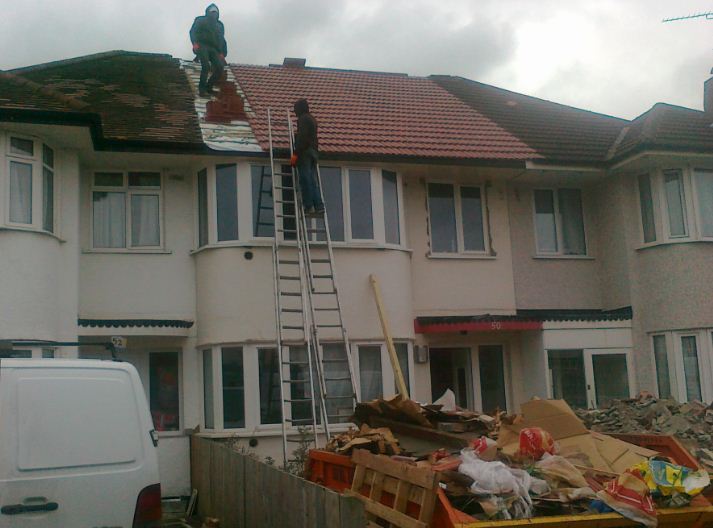
Lincoln Magistrates’ Court heard that the injured worker and a colleague were replacing fibre cement sheets on a storage building with steel sheets, using a mobile elevated work platform (MEWP), telehandler and crawler boards.
One was working inside the building from the MEWP, with the other on top of the roof using the crawler boards. Fixing bolts were cut from inside before the old sheets were slid out of the way to be removed by the telehandler, which was parked at the back of the building ready to take the load.
After an hour the worker inside the building joined the other on top of the roof to speed things up, but as he started to move the next roof sheet he slipped from the crawler board and stepped onto one of the cement sheets.
It wasn’t strong enough to take his weight and broke, sending him crashing to the ground below. He initially landed on his feet before falling over, with his back taking the impact.
HSE established that although both workers were working to a pre-planned method of work, it was inherently unsafe and failed to mitigate the risks of working with fragile materials.
The court was told that the roofing work was eventually completed a week later using scissor lifts inside the building, and that had this equipment been provided to start with then the incident could have been prevented.
Timmins Engineering and Construction of Tillbridge Lane, Sturton-by-Stow, was fined a total of £4,000 and ordered to pay £985 in costs after pleading guilty to two separate breaches of the Work at Height Regulations 2005.
After the hearing, HSE Inspector Chris Copeman said:
“The worker sustained a serious injury that could have been avoided had a safer system of work been used for removing the fragile sheets.
“The risk of serious or even fatal injury is high and eminently foreseeable with this type of work, and it is vital that the correct equipment and methods are in place.
“The company eventually got it right by working from inside the building and avoiding the need to physically go onto the roof, but it is sad that it took a serious incident before this happened.”
Blackburn skip firm sentenced over young worker’s death
- A Blackburn skip hire firm and its owner have been ordered to pay £80,000 in fines and costs after a 21-year-old worker was crushed to death.
Amin Qabil, from Afghanistan, was using a vehicle called a skid steer loader to move rubbish when the incident happened at Blackburn Skip Hire Ltd on 21 August 2010.
The company and its owner, Zarif Mohammed, were prosecuted by the Health and Safety Executive (HSE) after an investigation found the vehicle was unsafe to use and that Mr Qabil had not received any formal training.
Preston Crown Court heard that the firm had bought the second-hand skid steer loader at an auction in Doncaster, but had failed to ensure its safety features were working correctly when it used it at its warehouse on the Kensulate Park industrial estate.
The restraint bar had been disabled, which meant the controls could still be operated when no one was sitting in the cab. The minimum engine speed had also been increased, and a fault meant the vehicle could reverse unexpectedly.
Mr Qabil’s body was discovered just after midnight after the owner of a neighbouring business noticed the gates to the site were still open. He had suffered massive rear head injuries.
The HSE investigation concluded that the most likely explanation for his death is that he caught a lever as he climbed out of the cab and was crushed against the vehicle when the bucket on the front was raised.
Blackburn Skip Hire Ltd and Zarif Mohammed both pleaded guilty to single breaches of the Health and Safety at Work etc Act 1974 and the Provision and Use of Work Equipment Regulations 1998.
Blackburn Skip Hire Ltd, of Lower Hollin Bank Street in Blackburn, was fined £60,000 and ordered to pay £19,000 in prosecution costs. Zarif Mohammed, 36, of Leamington Road in Blackburn, was ordered to carry out 160 hours of unpaid community work in the next 12 months and to pay costs of £1,000.
Speaking after the hearing, HSE Inspector Matt Greenly said:
“Amin Qabil’s life was brought to an end after he suffered horrific injuries caused by a vehicle that should never have been in use.
“Blackburn Skip Hire should have made sure the skid steer loader it bought at auction was safe to use, and that workers were properly trained. Instead vital safety features had been disabled and lives were put at risk as a result.
“The company and its owner had a legal and moral duty to look after the safety of Mr Qabil, but sadly their failings led to him losing his life.”
The waste and recycling sector has been classified as one of the most dangerous industries in Britain, with a death rate that is 16 times the national average. The latest figures show a total of ten workers lost their lives in the industry in 2012/13.
Shropshire businessman fined for falsifying safety document
- A Shropshire businessman, who supplies workplace vehicles and lifting equipment, has been fined for falsifying a safety document for a forklift truck.
Wolverhampton Magistrates’ Court was told that Stuart Jeavons intentionally made a false entry on a Report of Thorough Examination for the truck, a statutory document required by law to show that lifting equipment is in a good state of repair.
A Health and Safety Executive (HSE) investigation found Mr Jeavons had put the name of a genuine forklift truck supplier at the top of the report and forged a genuine examiner’s signature at the bottom.
Stuart Jeavons, 57, of Bridge Road, Broseley, was fined £2,400 and ordered to pay costs of £989 after pleading guilty to a breach of the Health and Safety at Work etc Act 1974.
After the hearing HSE inspector Lyn Mizen said:
“Strict inspection regimes are there to ensure that lifting equipment is kept in good working order. The certification to support these examinations are key documents which a user of such equipment should be able to rely on to show the machine has been examined by a competent person and is safe to use.
“It is therefore critical that all aspects of inspection, examination and verification of the safety-critical parts of forklift trucks are carried out diligently, properly and with the highest level of integrity.
“HSE will not hesitate to hold people to account where it finds forged reports as it seriously endangers the health and safety of people at work.”
Port Talbot company in court over worker’s head injuries
- A Port Talbot manufacturer has been fined for safety failings after an employee suffered serious injuries when her head became trapped between two machines.
Gaynor Gordon, 47, was attempting to retrieve aerosol cans that had fallen from the production line, beneath packaging machinery, at Envases (UK) Ltd, which produces aluminium containers, on 10 July 2012.
Neath Magistrates heard that as Mrs Gordon reached into an unguarded gap between the packaging machine and the strapping machine, a can collection basket lowered, trapping her head.
Her cries were quickly heard by colleagues, who released her from the machine. She was taken to hospital and treated for a fractured cheek and eye socket.
Mrs Gordon also suffered post-traumatic stress disorder and was unable to return to work until this October. She also continues to experience damage to her vision in one eye.
The incident was investigated by the Health and Safety Executive (HSE) which found there was no guard to prevent access to dangerous moving parts of the machinery. HSE served a Prohibition Notice halting further use of the equipment until adequate guarding was installed.
Envases (UK) Ltd put fixed mesh guarding in place later the same day to bring the machine back into production, demonstrating that it was straightforward to control the risk.
Envases (UK) Ltd, of Baglan Industrial Park, Port Talbot, pleaded guilty to breaching Regulation 11(1) of the Provision of Work Equipment Regulations 1988. The company was fined £13,000 and ordered to pay costs of £6,590.
Speaking after the prosecution, HSE Inspector Clare Owen, said:
“Envases failed to guard this machine and the gap was large enough to allow Mrs Gordon access to dangerous moving machine parts. Sadly for Mrs Gordon this incident was both foreseeable and preventable.
“Luckily, colleagues were quickly able to release Mrs Gordon, which minimised her injuries. However, it has had a massive impact on her and she has only recently returned to work, some 18 months after the incident.
“This prosecution should send a strong signal to companies to identify and act on the risks presented by production machinery and to review the measures they have in place regularly.”
Staffordshire firm in court after worker shatters arm in dangerous machinery
- A Leek company that weaves and dyes webbing for seatbelts and harnesses has been fined after an employee seriously injured his arm in an unguarded machine.
50-year-old Andrew Thomas from Leek, shattered his left forearm in the incident at Marling Leek Ltd on 13 August 2012, and needed five operations to pin and plate it.

The warping machine in which Mr Thomas was trapped
He returned to work in May 2013 but has been left with permanent scarring and reduced strength and feeling in his arm due to muscle loss and nerve damage.
Stafford Magistrates’ Court heard that Mr Thomas was operating a warping machine, which runs at between 150 and 220 rpm to take single ends of yarn from dozens of bobbins to warp them onto a single bobbin called a beam. This happens under tension through a series of rollers.
Mr Thomas was trying to retrieve a piece of loose yarn to stop it being wound on to the beam when his arm was dragged and crushed between two pre-tension rollers. He was trapped for approximately 30 minutes before the fire brigade dismantled the rollers to free him. He was then flown by air ambulance to hospital.
An investigation by the Health and Safety Executive (HSE) found the warping machine was installed in 1988, but that at no time did the company recognise the need to guard it - exposing employees to significant risk for many years.
Although a risk assessment had been carried out it was not suitable or sufficient as it failed to identify the risk from the tension rollers, or that under specific legislation they were required by law to be guarded.
The risk assessment also failed to identify a risk of strangulation, as employees often crouched under up to 400 ends of strong yarn to get from one side of the machine to the other. The court was told that Marling Leek Ltd was prosecuted on 20 June 2012 for a similar incident in its dye house in August 2011. The company resolved the issues in the dye house after being served with an Improvement Notice, but did not review other areas of the business where near identical failings existed.
Since the 2012 incident full, interlocked perimeter guards have been provided and the risk assessment has been updated.
Marling Leek Limited, of Marling Mills, Nelson Street, Leek, Staffordshire, was fined a total of £35,000 and ordered to pay a further £5,257 in costs after pleading guilty to breaching Regulation 11 (1) of the Provision and Use of Work Equipment Regulations 1998 and Regulation 3(1)(a) the Management of Health and Safety at Work Regulations 1999.
After the hearing, HSE Inspector Lyn Spooner said:
“It is very disappointing that this company had not learned the lessons following a prosecution for a very similar incident and allowed the same failings to continue to exist in a neighbouring department.
“The process of risk assessment is a vital process to allow a company to identify significant risk and ensure it is complying with the relevant statutory provisions. In this case the process of risk assessment was not suitable or sufficient and this, together with the company’s failure to heed warnings, has meant that a very obvious risk has been left to exist for many years.
“Preventing access to dangerous parts of machinery is long established and there are ample guidance and industry standards to allow dutyholders to achieve compliance with the law. This incident was entirely avoidable and Mr Thomas should have been better protected by his employer.”
Printers fined after worker’s head was trapped in machine
- A major printing company has been fined for serious safety breaches after a worker suffered life threatening injuries when his head became trapped in machinery.
David Howkins, 57, was working on a stacker at the end of a web-fed printing press at The Artisan Press Ltd plant in Beaumont Leys, Leicester. As he attempted to replace a bearing, his head became trapped between dangerous moving parts and the fixed machine.
Mr Howkins, of Ratby in Leicestershire, suffered multiple skull fractures and spent 16 days in hospital in a medically-induced coma on a life support machine. He is now deaf in his left ear and has no movement in his left eye. He has had to learn how to walk again.
Leicester Magistrates’ Court was told that an investigation by the Health and Safety Executive (HSE) found the company failed to take effective measures to prevent access to dangerous moving parts of the stacker.
The court heard Mr Howkins had been asked to replace a seized bearing in the stacker. He managed to loosen one side of the bearing using an Allen key but couldn’t remove the other, so went round to the back of the machine.
HSE found the gate to the dangerous area was neither fixed in place nor interlocked, meaning there was free access to and around the dangerous moving parts of the stacker, which was not isolated from its pneumatic power supply.
As a result, his head became trapped when the mechanism of the stacker became activated.
The court was told Mr Howkins was freed by colleagues who cut away part of the stacker just before emergency services arrived.
The Artisan Press Ltd of Boston Road, Gorse Hill Industrial Estate, Beaumont Leys, Leicester, was fined £20,000 and ordered to pay £5,915 in costs after pleading guilty to a single breach of the Provision and Use of Work Equipment Regulations 1998.
Speaking after the hearing, HSE inspector Dr Richenda Dixon said:
“Mr Howkins’ life has been devastated by the horrific injuries he sustained as a result of The Artisan Press failing to effectively prevent access to dangerous moving machinery.
“Incidents where workers are injured, or even killed, by moving machinery are easily avoided if employers provide suitable guarding.
“Effective measures were not taken by The Artisan Press Ltd to prevent their workforce from accessing dangerous moving parts, in this case the stacker and sword drive mechanism.
“In addition, safe systems of work, information, instruction and training are required to control the risks during both production and maintenance activities.”
Mr Howkins’ wife, Mrs Lisa Howkins, said:
“David was in a medically-induced coma while in hospital for 16 days. We were told at this point that if he were to get pneumonia, his chances of survival were slim.
“When he first came round he was frightened, confused and extremely tearful, and when he came home, I had to help him with everything.
“We used to go on long walks with our dogs but now he can only really manage much shorter walks. He doesn’t really like to leave the house and he gets very tired.
“David is much improved now but whenever you try to talk about the accident he gets very emotional and bursts into tears.
“The prospect of returning to work frightens him but he is having counselling and is aiming to return to work one day.”